How often do you consider Alcatraz? You probably don’t unless it’s referring to a movie. If you’re old enough, then you know “Bird Man of Alcatraz,” about inmate Robert Stroud or you’ve seen 1996s “The Rock,” with Sean Connery and Nic Cage. And these stories ignore Alcatraz’s presence in Native American history with a Nov. 20, 1969 inflection point.
Apparently dating to 1969, an era of great cultural tumult when Centrism or Conservatism lost some of its grip strength on U.S. culture, a zealous group of San Francisco Bay Native Americans challenged its dominant narratives about what “America” is. That group, Indians of All Tribes, peacefully claimed the years-abandoned, defunct and closed prison.
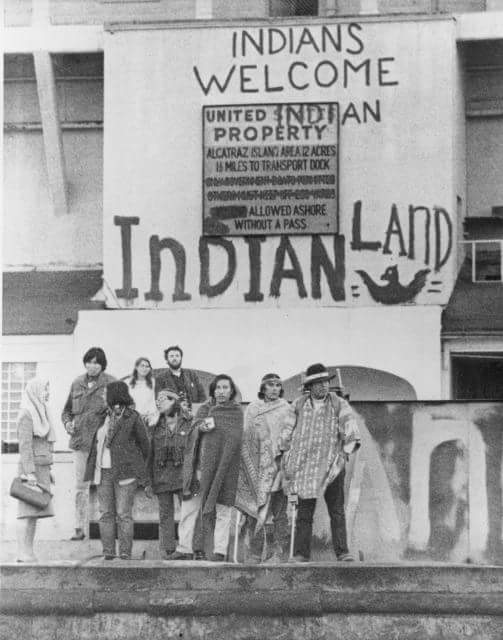
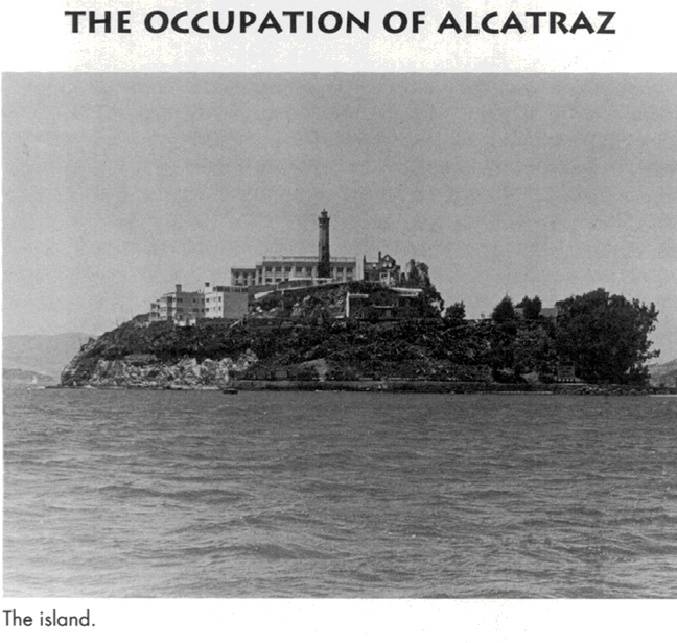
“Alcatraz was closed in 1963 because it was three times more costly to operate than any other federal prison, according to the Federal Bureau of Prisons, in large part due to its island location and lack of amenities that meant everything from food to fresh water had to be brought in,” according to The Guardian.
In 1969 just before claiming Alcatraz, the San Francisco Indian Center had mysteriously burned down! “…the organizers proposed Alcatraz as a site for a new cultural center, a place to educate, preserve and reestablish Native American ways..,” according to KQED.
Nov. 20, 2026 marks more than 55 years and nearly three generations since that year-and-one-half-long political stand for long-ignored Native human rights were made to the Nixon administration.
“On November 20, 1969, 57-years-ago a group of Native American students landed on Alcatraz Island, launching a 19-month occupation based on an established legal principle of reclaiming abandoned federal lands for Native use. Their claim came after years of watching the U.S. government terminate the status of over 100 tribes and remove approximately 2,500,000 acres of trust land from protected status,” according to KQED.
History.com cited a local quotation from one of the key activists, Richard Stokes, “If a one-day occupation by white men on Indian land years ago established squatter’s rights,” he told The San Francisco Chronicle, “then the one-day occupation of Alcatraz should establish Indian rights to the island.” “They claimed Alcatraz was theirs ‘by right of discovery,’ but they sarcastically offered to buy it for ‘$24 in glass beads and red cloth’—the same price that Indians supposedly received for the island of Manhattan”.
Alas, with a bounty of idealistic plans by youngsters, the reality of publicity, a college calendar, and idle greed fell the marathon occupation. According to History.com, “For most of late 1969, the occupation proceeded better than activists like Richard Oakes could have ever imagined. By early 1970, however, life on the island had begun to change. Many of the movement’s college students and organizers had to leave Alcatraz to return to school…”
A consolation: “President Richard Nixon had given a speech saying, ‘The time has come…for a new era in which the Indian future is determined by Indian acts and Indian decisions.’ The U.S. government later returned millions of acres of ancestral Indian land and passed more than 50 legislative proposals supporting tribal self rule,” History.com.
As for knowledge of Native Americans’ motley cultures and histories, few in the United States know anything beyond that, which circa mid-20th-Century movies and TV shows portrayed. Few of the “Indian” characters were portrayed by Native Americans. Jay Silverheels of “The Lone Ranger” TV series was a conspicuous outlier.
Many Native-American filmmakers lament that most in the United States persist in “knowing” Natives from generations-old Old-West-era films. Relative to that, Minnesota Public Radio is the rare newsroom I know about that has a Native American reporting initiative covering Native-related stories. If that old-movie-based reality, and life “on the Rez” were neither tragic nor toxic, then those portrayals might be funny!
In 2026, 57 years after the occupation of Alcatraz, for California Gov. Newsom’s own reasons, according to CalMatters.org, he vetoed on Sept. 30 a bill from advocacy group Indigenous Justice, Assembly Bill 1881, which would have strengthened protections for tribal religious practices and sacred sites.
If you’re curious, then Prof. Anton Treuer’s “Everything You Wanted to Know About Indians But Were Afraid to Ask” is a decent stepping stone.


Leave a Reply