My dad, who was much older than most dads, served in World War II. As with most veterans, he seldom talked about his time in uniform.
Although I’ve a years-long habit of writing and sending cards to veterans in order to acknowledge Veterans Day, that day keeps sneaking up on me! In looking at a calendar last week I’d swear that it falls a week later than it does!
The 2025 Census Bureau Veterans Day report shows that the veteran community is just under 6% of the U.S. populace. The active-duty community equals fewer than one-half of one percent of that populace. Please consider that puny number.
According to the American Legion, after the social and political tumult of the 1960s, 1970s, and the Vietnam War, “As time progressed, there was an apparent national guilt about making the common service member the scapegoat for a war they did not cause, did not understand, but were willing to commit to support as a member of the armed forces.
What was society’s new response to American servicemen? To try to make amends for past insults by thanking veterans for their service.”
A later piece by the American Legion observed thusly, “A new survey sponsored by USAA reveals…that nearly 70% of younger military/veterans say they feel uncomfortable or awkward when someone says “Thank you for your service” to them. Conversely, only 24% of military/veterans aged 65+ say they feel uncomfortable or awkward when someone says the phrase to them.”
Ignorant of these American Legion reports, for many years I have had a habit of sending cards to the veterans whom I know. I’ve not kept track of when I began to do this.
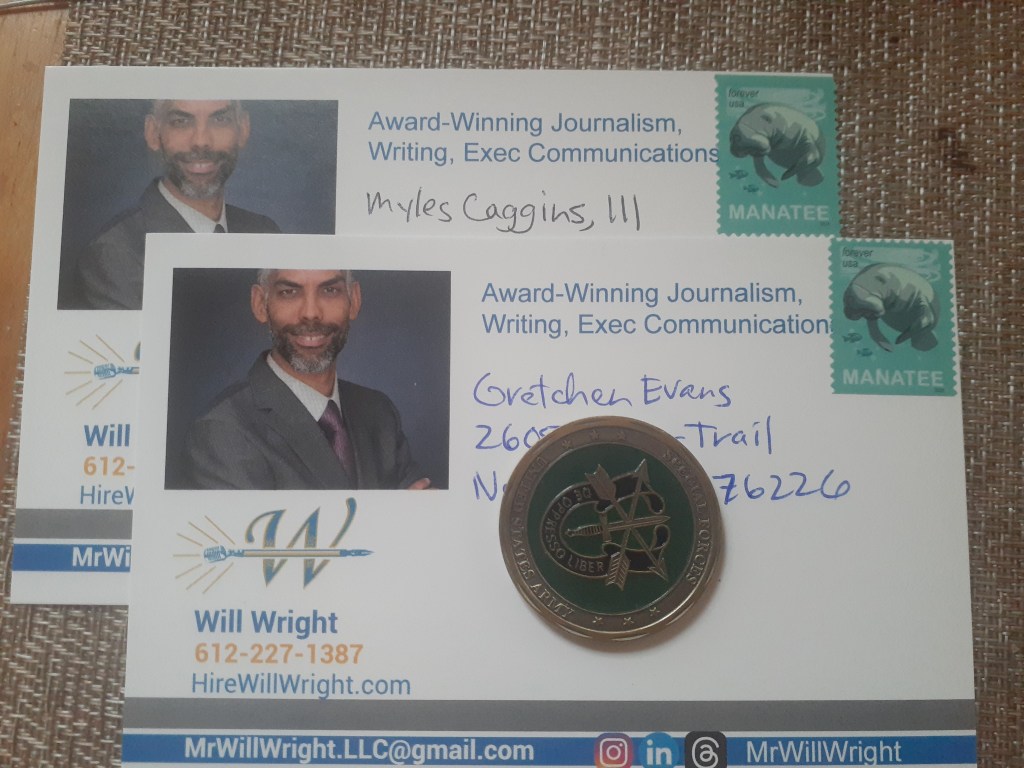
This year, it occurred to me that writing about this social habit might nudge civilians to do as I do. I’m fallible about it though; last month I noticed that a former soldier whom I last met 10-years-ago – I’d utterly forgotten to send him a card.
But in 2026, isn’t it foolish and futile to send cards on a “minor” holiday? Evidence contradicts this.
According to an US Postal Service Office of the Inspector General report, “Gen Z and the Mail, “when asked what medium conveys true emotional depth, more Gen Zers reported that receiving cards, letters…makes them feel more happy than receiving texts, emails or video calls.
They consider this an “antidote to constant screen time. When checking their mail, “over 54% of Gen Z rank personal cards and handwritten letters as their top 1st or 2nd priority to open” It seems that this generation “actively sends letters or packages one to two times a month”. When asked what drives them to use physical mail over digital means, 37% of respondents said that the “personal touch” motivated them.
Psychologically younger generations report feeling overwhelmed by endless pings, text threads and social media feeds. Physical cards cut through the digital fatigue with something tangible, permanent and “real”.
On the reverse of Veterans Day, I’ve learned that some Americans conflate that with somberness of Memorial Day. Via email a now-retired U.S. Army colonel affirmed the awkwardness of saying “happy Memorial Day” to veterans:
“Not sure about Memorial Day greetings. It’s an odd day in that it’s a remembrance of dead troops in contrast to Veterans Day to honor those who served.”
Most well-intentioned civilians will be tongue tied about what to say to acknowledge that day.
I thank veterans for having taken the oath, and I ask that they choose to remember the moments of their service that stir grins and laughter. Ideally, the tour of duty had to have had a few of those moments!
I’m writing this days ahead of Veterans Day. This way you, reader, can either go buy Hallmark cards or, as I do, go buy blank flat cards and envelopes so you’ll have time to send your feelings and thoughts promptly for Nov 11th.


Leave a Reply