The distinguishing factor of the 1980 horror story “The Changeling” is that it mixes that with a murder mystery. Name another memorable film that accomplishes this. The mixture makes this one my favorite scary film. It has neither gore, viscera nor cheap shocks, which are pillars for common, and oft forgettable horror stories. If you’re mature enough, then that lack of tropes probably attracts you.
And George Scott’s composer, main character, John Russell, neither scares nor startles easily. Russell is a retirement-age widower who lost his young daughter and wife in a recent winter car accident. Pulitzer Prize-earning film critic Roger Ebert disliked and named this vice of Scott’s portrayal “he’s too self-possessed”.
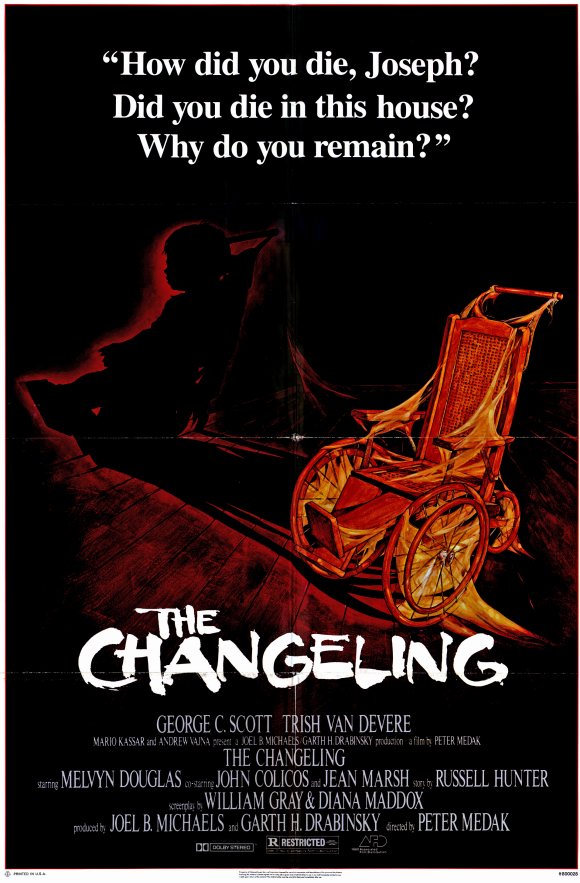
The murder mystery is what keeps you watching. How many haunted house stories have you already seen? How many of them bothered to consider a solid, cold-blooded backstory for the haunting? The story, such as it is, usually focuses on the tropes.
In “The Changeling,” the recurring metallic morning-hour knocking sounds Mr. Russell hears are one mystery. The revelation of an attic bedroom raises hairs and questions; that’s a turning point. Why was a child kept there? Why was the room locked and hidden behind boards, made to resemble a banal closet? And the journal found, dated 1909, and the similarity between music box found within and a tune that Russell tells the Claire Norman, from the local historical society, he “hadn’t heard before today when I composed it” is peculiar. This set of questions revs the engines.
Then the sober séance, which he records, makes John pause. He’s already (mostly) mourned his daughter’s death. After the off-putting sounds, running water in this mansion in rooms he’d never entered or knew existed, the discovery of and newly-opened questions about the room, and what he heard in the recording, he asks Ms. Norman, the realtor for the historical society, “what does the house want from me? Is this about my daughter? I can’t go through this again”!
“And The Changeling is a great story — arguably one of the best haunted house movies ever made. It’s spooky without being schlocky, terror with hardly a drop of blood. And as effective as the haunted house device is, the real mystery driving the haunting is so cold-blooded and practical that you won’t even think twice about its motivation,” Bloodvine notes.
The film earned nine Genie awards, Canada’s version of the Oscars, including the major ones, the Golden Reel and Best Motion Picture.
Millennials, GenZ and Generation Alpha seem to want and expect metronomically timed gore, viscera and shocks to qualify a story and satisfy viewers as horror. Maybe so? Aren’t those common enough to qualify as tropes? Tropes are faults.
Maybe it’s a niche audience? But to have a mystery at the core of a haunted house yarn, instead of conspicuously timed gore or shock moments, is refreshing. The cold-bloodedness of the murder mystery sticks with you.


Leave a Reply