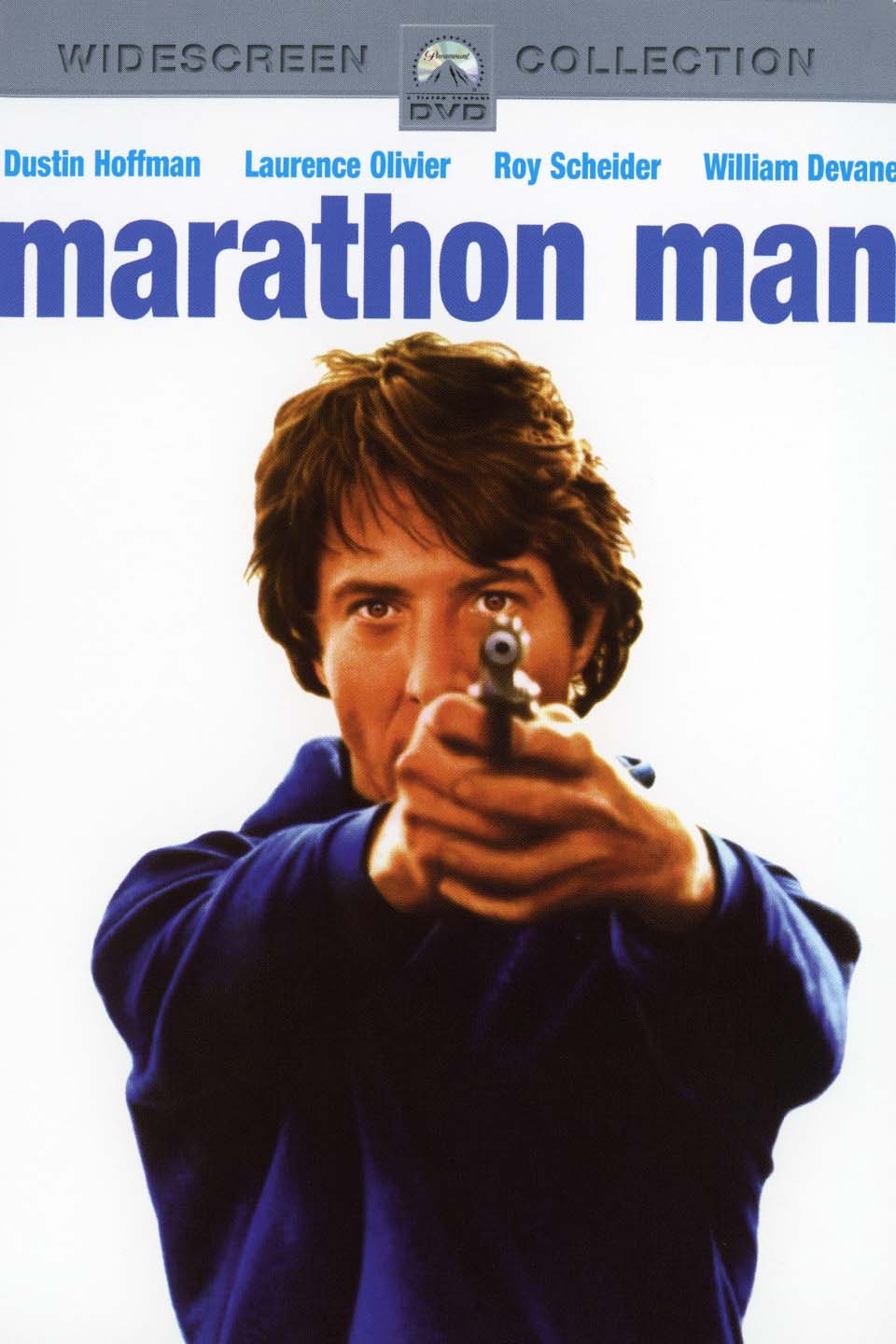
The Holocaust-related thriller “Marathon Man” came out in general release on Oct. 8, 1976. The most memorable, notorious and best-publicized scene in it is the disturbing sadistic dental one with Lawrence Olivier as Nazi war criminal Christian Szell uses root canal as torture on graduate student Dustin Hoffman as Tom “Babe” Levy.
The notion of Szell is a stand in for real Josef Mengele. With Szell emerging from hiding in South America, “Marathon Man” is about greed and remorselessness on his part, and grief and guilt on Tom Levy’s part. He’s haunted by his dad’s having killed himself from the humiliation of the Red Scare/McCarthyism. It’s the premise of his thesis.
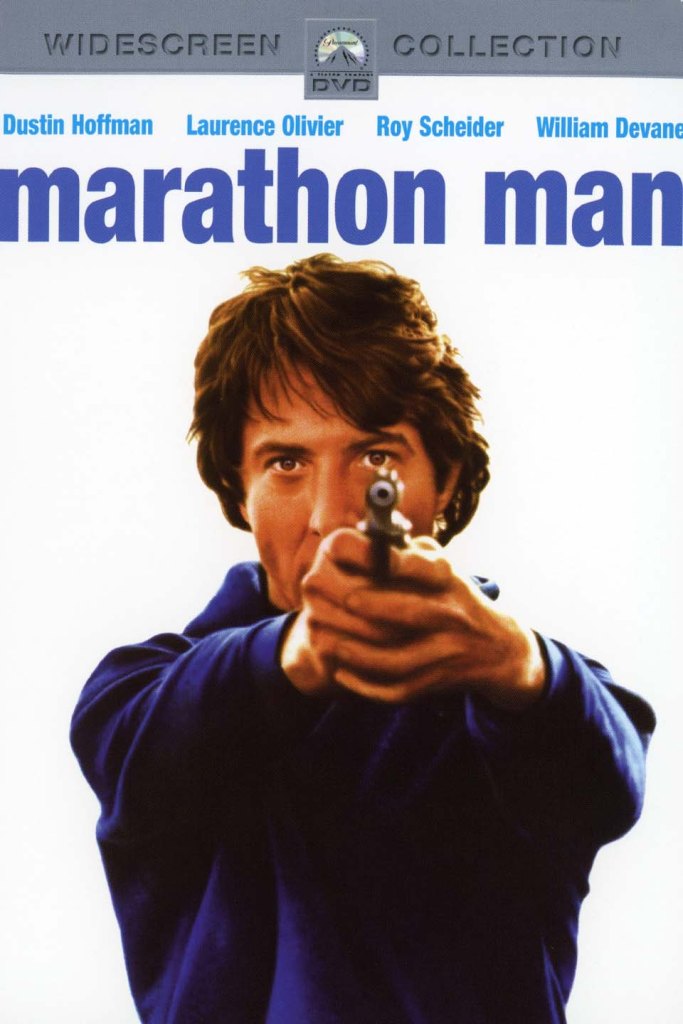
War criminal Szell must come to Manhattan after his brother was killed in what we’d today call a road rage incident. He’s paranoid about his banked ill-gotten diamonds remaining “safe”. Later in the film, in that notorious scene, he asks Levy, “is it safe” persistently. The safety is about his stolen diamonds.
A vital part of this tale: Graduate student and long-distance runner Levy is clueless about Szell’s existence and diamonds.
Late in the film, you remember the death camp survivors in Manhattan’s Jewish dominated Diamond district (in this film 30 years have passed since WWII ended) slowing recognizing then calling out Christian Szell. The notorious dentist without conscience is surrounded by a block full of Jews. He kills, in broad daylight, the jeweler, who recognized him, then comes to him declaring, “I know who you are”.
The most disturbing facet of the “Marathon Man” tale is that once Szell has Levy, he assumes the worst; that Levy knows about him, and his precious diamonds. As has been mentioned in articles and commentaries, which research dredged up, the tragic and painful reality for Levy is that he knew and knows nothing of either the criminal or his ill-gotten diamonds.
He doesn’t know enough to satisfy Szell, even if his caution and paranoia would allow him to accept Levy’s “knowledge” as credible and accurate.
Through that agonizing, for Levy, and off-putting, for us, the dental scene, he hasn’t the power to stop Szell! And, then in a twist of perverse manipulation, William Devane’s character, Janeway, working as a niche troubleshooter for a government-related agency, breaches the scene saving Levy from Szell’s clutches – And it’s a psychological trap! It was a ruse. After having fired blank bullets at Levy’s tormentors, Janeway returns Levy to Szell’s grip!
Levy escapes and gives Szell a comeuppance, then proceeds with his life.
The 1970s films “Three Days of the Condor,” “All the President’s Men,” and “The Parallax View” reflected an era of suspicion of and a demand for openness from government. Citizens of the U.S. had seen evidence that the institutions in which their parents had vested unquestioned trust, loyalty and held as sacrosanct, were fallible.
In 2026, ever fewer North Americans find either the 1950s Red Scare/McCarthyism, which haunts Levy or the Holocaust, of which Szell is an emblem, to be fresh knowledge. And 50 years after “Marathon Man” was new, fresh, thrilling and scary, it’s a vintage film. With web-centric and social media culture clogging people’s attention, there’s scant brain room for 50-year-old or four-generation-old WWII history.
Neither Gen-Z nor Alpha will watch this film unless some producers choose to “reboot” it – And, in my viewing experience, reboots are oft shallow and embarrassing versions.


Leave a Reply