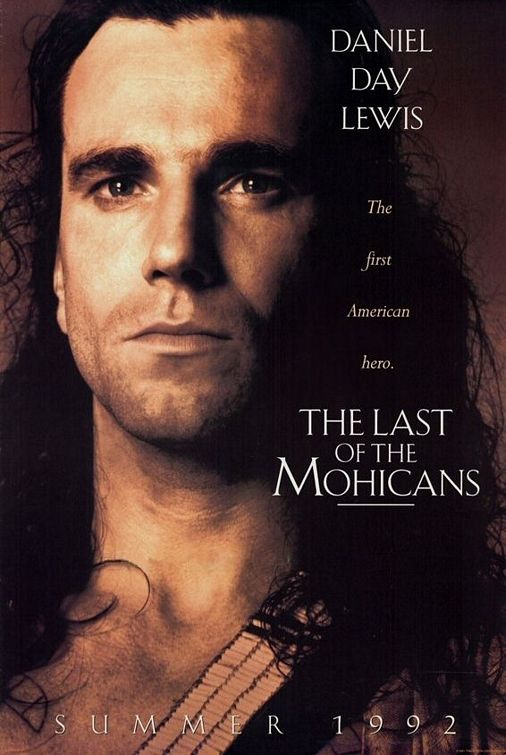
Michael Mann’s 1992 “The Last of the Mohicans” came out on Sept 25th 1992. An historical epic, a proto-western story (well before the Old-West arose), and this is among the rare films where the Native or adopted Native characters, like Hawkeye (played by Daniel-Day Lewis), Chingachcook (played by Russell Means), are peers to the presumed white heroes English Major Duncan Heyward, and a general’s daughters Cora (Madeleine Stowe) and Alice Munro (played by Jodhi May).
Daniel-Day Lewis’ Hawkeye is compelling and vibrant. While “minor,” Wes Studi’s embittered villain Magua, with what Hawkeye calls “twisted” loyalty, is a fully-drawn vibrant and memorable character.
For those who need to know, this film is an adaptation of James F. Cooper’s novel of the same title. Alas, Mr. Cooper, being what some might call “a man of his time,” was a bigot. If you read some of the research about his peers’ opinions of him, you’ll note that his showing any respect or consideration of humanity to the Mohicans, Hurons or other Native nations showed that he was too kind.
The culture clash between the Mohican trappers’ story and the English army’s perspectives make for a compelling yarn. The British army causes or worsens its own problems by not believing Hawkeye and Chingachcook’s vantage point of Native raids on settlers’ homes found in prior scenes. The parrying between Major Heyward and Mohican Hawkeye land toward reluctant mutual respect.
In the 20 years since watching this, the most memorable facets are the tug and pull of the bias and beliefs between the groups whom these men are symbols for. Between or the reason behind the parrying is attraction to Cora Munro. She’s the object of each man’s desire. The “Romeo and Juliet” romance between she and Hawkeye occurs amid the great, complex and confusing historical and political tumult.
I remember my emeritus scholar brother telling me, because he’d read the novel, that in Cooper’s book Hawkeye and Cora do not romance. (Never mind that in the book Cora’s part Black!)
I remember the open-air trial scene before the promontory sequence. Magua, Hawkeye and Heyward plead each’s case to a tribal chief for who should die to sate either Magua or the English’s anger. After Heyward hears Hawkeye offer himself to the Native chief not to have Cora killed, Heyward offers himself instead. That confirms the hesitant mutual respect that each held for the other. It’s rousing. Afterward, Hawkeye puts Heyward out of his burning agony by firing a long-distance musket ball.
I remember the final chase and the subtle string music under it. It’s several minutes where the flow of the chase and the under music carry the sequence without dialogue. After Magua has dispatched Uncas, Alice seizes the pause in travel to make a mortal decision. After Uncas has fallen off a steep cliff, she prefers stepping off from that cliff to being near Magua.
The opening and Promontory music backend the tale. The music with percussion and strings is subtly frenetic. This historical epic of English, French, colonists’ and Native tug of war over land, culture, autonomy, and a star-crossed romance is a compelling and indelible film!


Leave a Reply