As with many films the GenXers know, they wonder “how is “Dirty Dancing” nearly 40-years-old”? On August 21, “Dirty Dancing” was released in 1987. What any of us saw might be disparate from what or how we remember it more than 30 years later. The youngster dance and romance story aged in a peculiar way.
I’ve only faint teenage memories of seeing it. A peculiarity is that, not being middle-class or Jewish I don’t know how I chose to watch this. In the 30 years since “Dirty Dancing” came out it went from a simple teen romance and dance story to one where the reality of a botched and illegal abortion is the story! The film reviews that’ve come up show critics almost panning it as a common teen star-crossed-lovers yarn; the word schmaltz might’ve been used.
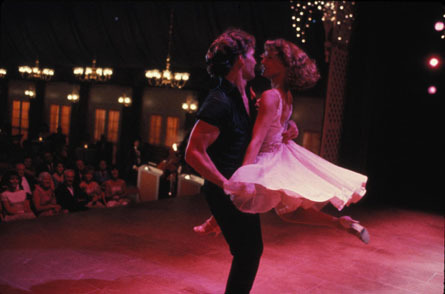
In preparing to observe the film and doing research, I’ve discerned that there are disparate realities or perceptions between viewing it before legal age and after you have some adult experience.
At age 15 or 16, I didn’t recognize the abortion subplot as vital much less a hinge for the story – Yet, in doing research so I could observe the anniversary competently, I see that 30th anniversary articles and commentaries name abortion as the story! As of 2026, that was eight-years-ago.
I have not seen decades of hindsight change the understanding of a film story this dramatically before! In order for this to be less shocking, contemporary writers make the point that with the settled law of Roe V. Wade having been incredibly stricken down in 2022, “Dirty Dancing” carries a different meaning as DVD or streaming viewers watch.
Asking Perplexity about my obtuseness to the intended plot, it told me that 40% of viewers who saw it in theaters saw the dancing, music, romance and coming-of-age as the whole. I guess that mature themes could blow right past your childish, teenage or 20-something self? But a seismic jaw-dropping change in settled law could alter the prescription on your cultural or social lenses.
It’s peculiar in reading a brief interview at TabletMag with the film’s writer, Eleanor Bergstein, the nasty realities of the botched low-rent abortion was the core that she’d written. “I put in very specific language—dirty knife, folding table—because I thought that if it didn’t have that, people would have thought [Penny] had a stomachache or an appendectomy at Planned Parenthood that went wrong. They wouldn’t have understood what was happening.”
A winkle in understanding the happening or enjoying the film is that nothing in it related to me! I didn’t have to be a teenage girl in order to appreciate it. But It takes place more than a generation before me, concentrates on a middle-class or affluent Jewish family. I was a lonely, very introverted biracial Black teenager living in the 1980s. Dating was a mystery to me, which others understood! And I didn’t know middle-class life.
Nearly two generations after an idealistic nascent woman meets a wrong-side-of-the-tracks 20-something man, viewers see a feminist film in what many critics wrote off as a shallow cookie-cutter yarn.
Cinema, having begun circa 1890, is a little more than 100-years-old. Even “The Holy Bible” in Ecclesiastes 1:9, acknowledges that “…there is nothing new under the sun”. Storytelling is millennia old. If a filmmaker wants to make a story that’s new or novel, then that is daunting.
Without many viewers grasping the abortion plot in 1987, apparently Ms. Bergstein yearned to make audiences notice the crisis extant in a pre-Roe V. Wade America. This although nearly half of them missed that for the romance, music, dancing, which grabbed their attention.


Leave a Reply