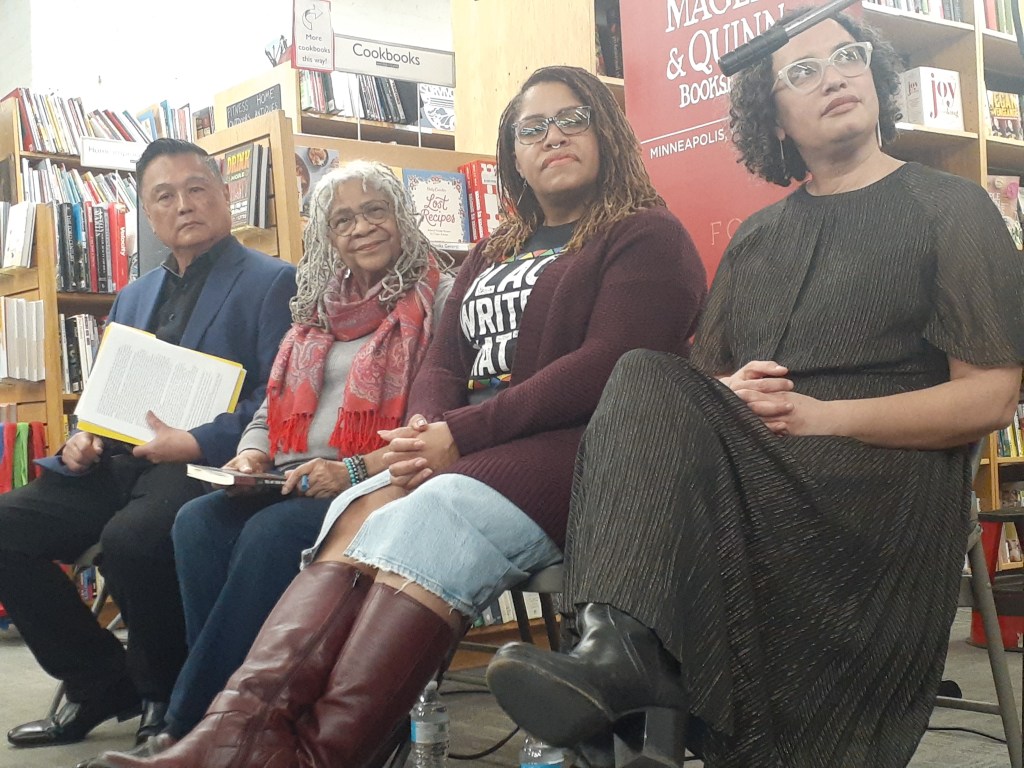
Authors met on Feb 13 in a cozy space near the rear of Magers & Quinn Bookseller in Uptown. This was in order to mark Black History Month.
Black and Japanese-American authors met in order to mark love, of self, and culture.
Twin Cities-based authors and teachers, David Mura (“Turning Japanese,” “We Were Meant to Rise” and “Stories Whiteness Tells Itself,”), Shannon Gibney “See No Color,” “Dream Country” and more) and Carolyn Holbrook (“We Were Meant to Rise”) read from works, commented on context, then answered questions.
I was biased. One voice, Mr. Mura, drew me to the event. Several years ago dozens of Black, brown, Asian and Native American writers and me took a series of class at the Loft Literacy Center with him. After the constraints of the pandemic, I missed being near and hearing his perceptive wisdom.
While reading from “Stories Whiteness Tells Itself,” (which can be difficult to read) Mr. Mura mentioned an opponent of Black pride in ® Sen. Tom Cotton. He said that in 2020 that senator had tried to create a rule that prohibited federal money from paying for curricula based on the 1619 Project. It was called Saving American History Act of 2020.
The implicit offense was stirring guilt among whites by reminding citizens of the roles slavery and racism played in the foundation and history of the U.S.
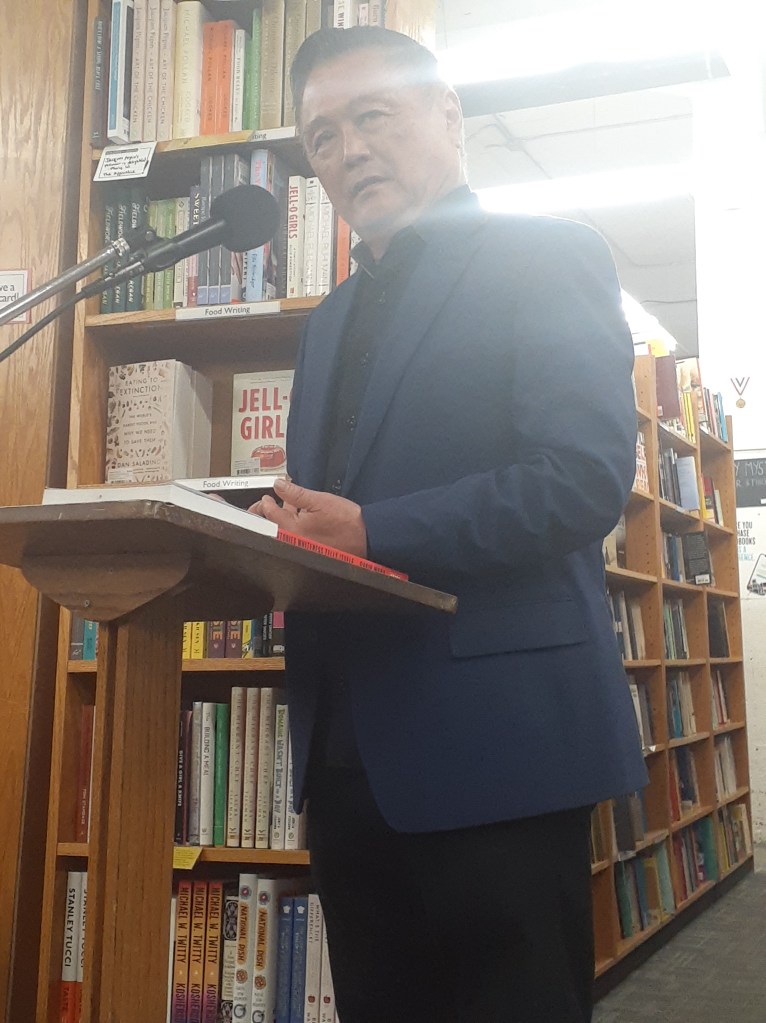
Mr. Mura reminded us from his book that “whiteness makes itself the victim of his own crimes”. This is crazy-making. The frequent and reflexive white retort to non-whites is according to his book often “you keep bringing up what I did to you”! For them, to leave the past in the past is a righteous desire.
The quarters at Magers & Quinn Bookseller were just above being too-close-for-comfort.
As Black, brown and similarly marginalized peoples try to thrive within dominant culture, many lawmakers still question our validity.
The U.S. populace clings to an oft extolled creed of freedom, equality and justice (and racism) the last of which is spoken of only in quiet/secret spaces. To white minds, the notion extolling virtues of Black love and dignity is radical and un-American. For us to see and know ourselves as equal, and second to none is just as radical.
Despite earnest efforts by “good white folks,” as Blacks called them during the mid-20th century, to accept or embrace non-whites, a large minority still embraces Blacks and other nesses at its whim and when in-vogue.
The prose of Mura, Gibney and Holbrook provide salve when the popularity of Black History relies still on whites, and only trickles upon some of those who deserve and need it.
 Will Wright: Award-Winning Independent Journalism, Exec Oratory and More...
Leave a comment